Pierre Michel
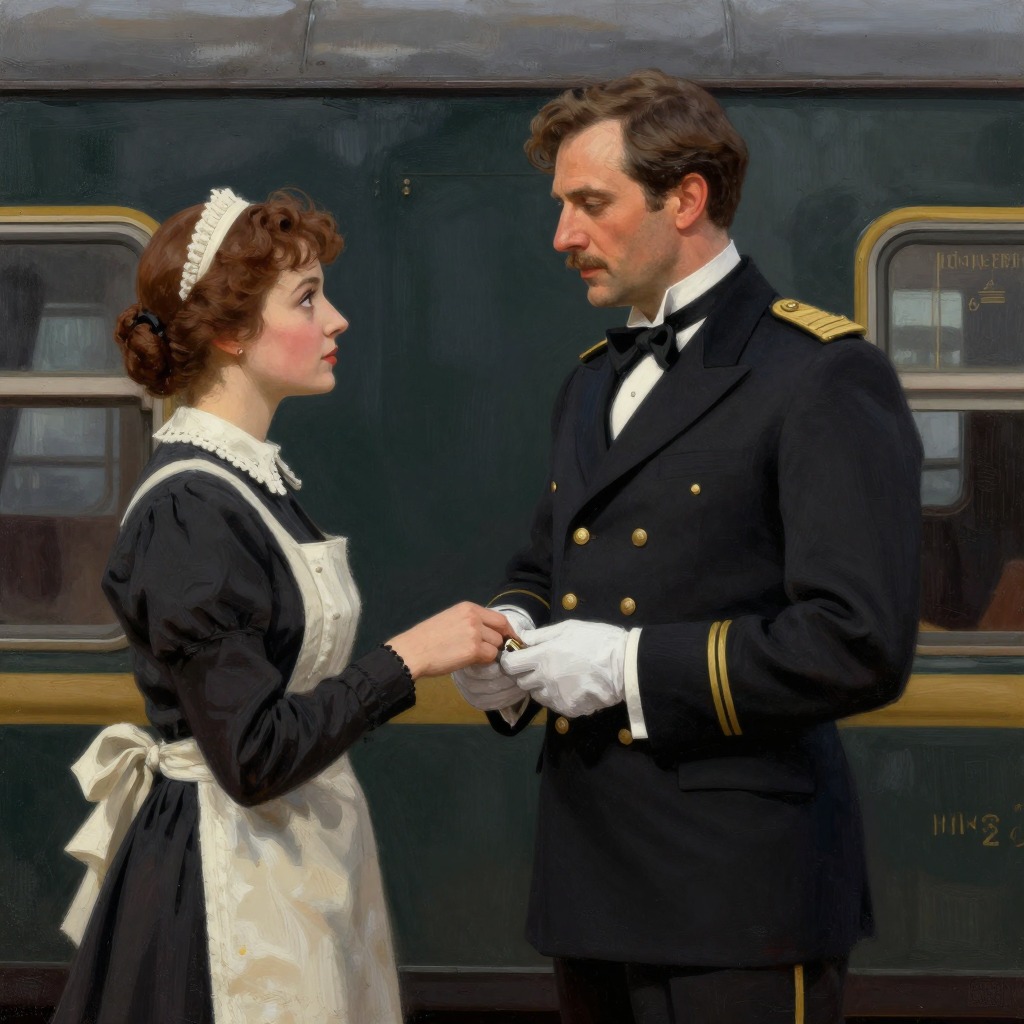
Pierre Michel is the Wagon Lit conductor of the Stamboul-Calais coach on the Orient Express, a Frenchman whose fifteen years of service with the Compagnie Internationale des Wagons Lits mark him as a thoroughly respectable and honest employee. Yet beneath this placid exterior lies a profound personal tragedy: Michel is the father of Susanne, the French nursemaid who threw herself from a window after being wrongly suspected of complicity in the kidnapping and murder of little Daisy Armstrong. This loss, and the failure of the legal system to punish the true culprit, Cassetti, drives Michel to join the conspiracy of twelve passengers who have condemned Ratchett to death.
Role in the Conspiracy
Michel's position as conductor of the Stamboul-Calais coach is essential to the plot. He is able to ensure that the coach is fully booked by the conspirators, leaving no room for genuine strangers, and he can control access to the train. His uniform and pass-key are used by the conspirators to create the illusion of an outside assassin: a small dark man with a womanish voice, dressed as a Wagon Lit attendant, who supposedly enters the train at Vincovci and escapes after the murder. Michel himself provides the alibi for this phantom figure, claiming to have been in the Athens coach talking to colleagues when Mrs. Hubbard's bell rang, and his description of the man he supposedly saw matches the one given by Hildegarde Schmidt and others.
The Button and the Uniform
A button from Michel's tunic is found in Mrs. Hubbard's compartment, a clue that initially seems to implicate him. However, Poirot quickly deduces that the button was deliberately planted by the real murderer to cast suspicion on the conductor. Later, the Wagon Lit uniform itself is discovered in Hildegarde Schmidt's suitcase, further supporting the theory of an impostor. Michel's genuine astonishment and distress when confronted with the button, and his insistence that he lost no button, are consistent with his innocence of the planting, though not of the larger conspiracy.
The Revelation of Complicity
Poirot's final solution reveals that Michel is not merely a dupe but an active participant in the murder. The detective reasons that the conductor must be one of the twelve executioners, and the only plausible link is through the dead nursemaid Susanne. Michel's daughter was driven to suicide by the Armstrong case, and he has joined the others in carrying out the sentence that society failed to deliver. Linda Arden, in her confession, confirms that Michel was willing to help because Susanne was his only child. His role in the plot is to provide the logistical framework for the crime, using his knowledge of the train and his authority to ensure that the conspirators can act without interference.
Thematic Significance
Michel embodies the theme of justice beyond the law. He is a decent, hardworking man who has been driven to extreme measures by a personal tragedy that the legal system failed to address. His participation in the murder is not motivated by personal gain or malice, but by a profound sense of loss and a desire for retribution. Michel's character also highlights the class dimensions of the conspiracy: he is the only working-class member of the twelve, and his role is that of the facilitator, the one who provides the means rather than the motive. In the end, M. Bouc and Dr. Constantine accept Poirot's first, more conventional solution, which exonerates Michel and the other passengers, allowing the conductor to return to his duties without facing the consequences of his actions.